
Sign Letter: Protect Scientific Institutions in Iran
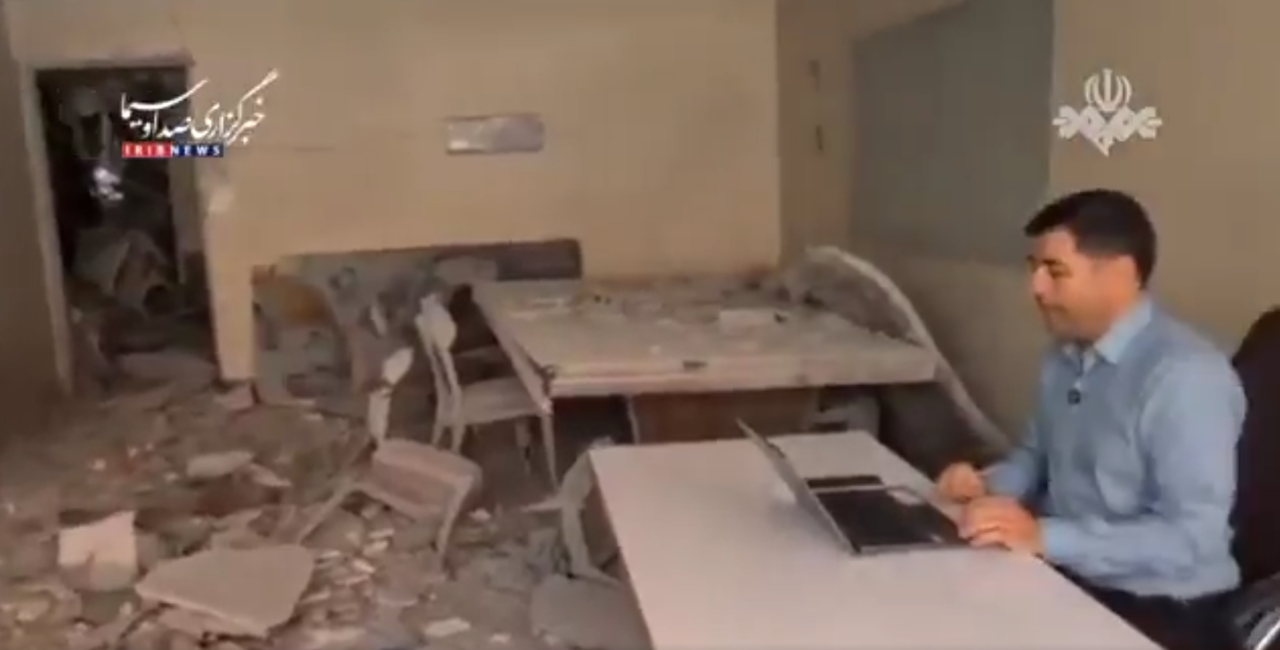
The American-Israeli war of aggression against Iran and its allies has involved bombing many civilian targets and, as of writing, has resulted in strategic defeat for the aggressors. Their aggression was morally depraved. Scientists everywhere add their voices to the global condemnation of all US-Israeli atrocities. We also note with specific alarm the attacks on our Iranian and Lebanese colleagues, their universities, institutes, and laboratories.
The letter below calls for accountability for this aggression against Iranian science. As of 9 April, it has been signed by over 1000 scientists, including two Nobel Laureates and a Dirac Medalist.
Open Letter: Protect Scientific Institutions in Iran and Ensure Accountability for Aggressors
To the United Nations Secretary-General, the Director-General of UNESCO, the UN High Commissioner for Human Rights, and the governments of all parties to the conflict
We, the undersigned academics, researchers, students, and members of the global scholarly community, express our grave concern over at least 21 attacks that have damaged laboratories, universities, hospitals, and other scientific institutions during the ongoing unprovoked USA – Israel's aggression on Iran. The latest instances* were three attacks on 28, 29 and 30 March 2026 on Isfahan University of Technology in Isfahan and Iran University of Science and Technology and Amirkabir University of Technology in Tehran. In another strike on 31 March, one of Iran’s largest pharmaceutical R&D centers, Tofiq Daru, a major producer of anesthetics and treatments for MS and cancer, was targeted and severely damaged. As an aftermath, Iran also threatened to retaliate on American and Israeli campuses in the region.
Scientific and educational institutions are civilian spaces essential to public health, knowledge, and human survival. Their destruction endangers researchers, students, medical personnel, and the broader public, while causing lasting harm to science and society.
We call on all parties to immediately cease attacks on civilian scientific and educational sites, including laboratories, universities, hospitals, research centers, libraries, and archives.
We further call on the United Nations, UNESCO, and relevant international bodies to document damage to these institutions, protect affected scholars and students, and support independent investigations into violations of international humanitarian law. Those responsible for unlawful attacks on protected civilian sites must be identified and held accountable through impartial legal mechanisms.
Science is not a military target. Universities and laboratories must not become battlefields.
We urge the international community to act now to protect scientific infrastructure, defend academic life, and uphold the principle that knowledge-serving institutions must never be treated as expendable in war.
Signed, Academics, researchers, students, and members of the global scholarly community
* At the time this letter was published, only the institutions mentioned were affected. Since then, many more have been added, including Pasteur Institute of Iran and Sharif University of Technology.
The full list of signatories can be found here. To add your name click here.
Are you ready to help transform rubble into functional classrooms and laboratories once again? Contact us, and we will guide you to the best way to contribute based on your country of residence.
Al Jazeera report from 29 March 2026
Statements from signatories
May-Britt Moser: "As a professor and Nobel Laureate I am shocked and saddened by what is happening in Iran." More here.
John Ellis: "I know well several universities in the region, including Iranian, American, and Israeli. Such attacks on civilian universities are unconscionable."
Werner Nahm: "Massud Ali-Mohammadi, who was killed by a Mossad bomb in 2010 in Teheran was a close colleague of mine. This and some similar killings were discussed in "Nuclear scientists as assassination targets", W. Tobey, Bulletin of the Atomic Scientists 68 (2012) 61-69, without naming Israel. In hindsight, we should have reacted much more strongly. When such killings become routine, non-virtual conferences and other free encounters of scientists will become impossible, to the detriment of all of mankind."

Comments ()