
Cuban Science Under Siege: an Interview with Dr. Ernesto Estévez Rams
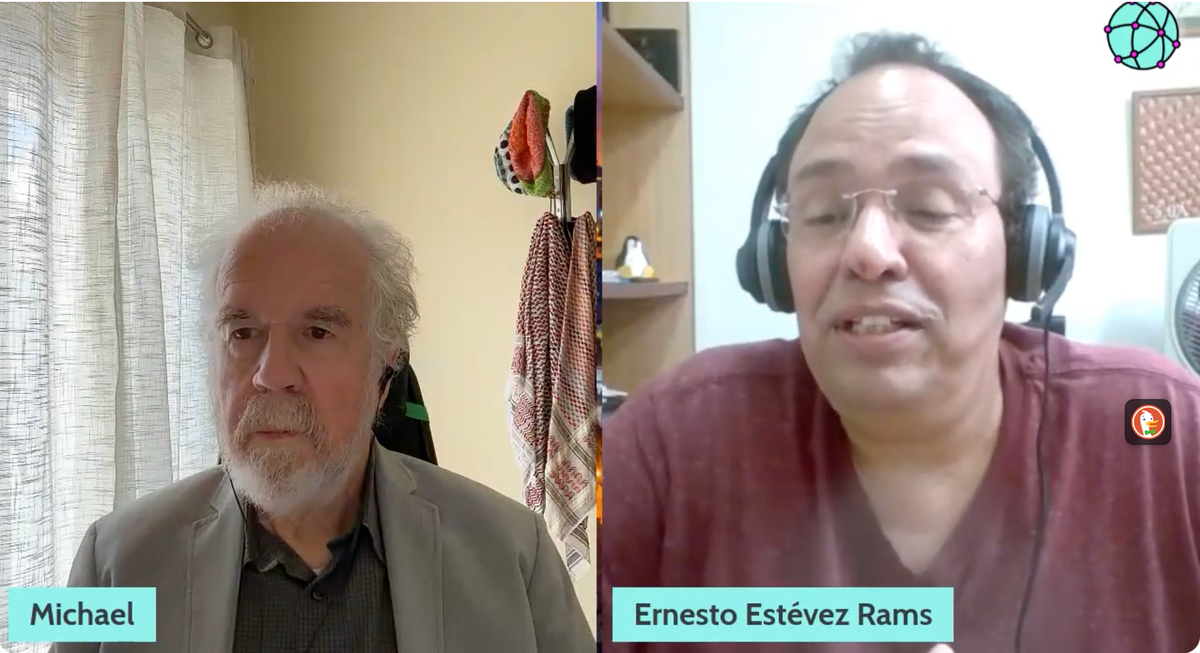
In an era when science is increasingly mobilized for militarism, surveillance, and corporate profit, the International Union of Scientists (IUS) seeks out voices that remind us what science can be when it is directed toward human flourishing. This interview is one such voice.
Dr. Ernesto Estévez Rams is a physicist, crystallographer, and information theorist at the University of Havana. He is also a scientist working under conditions that most of his international colleagues can scarcely imagine: decades of economic blockade and escalating extraterritorial sanctions.
IUS Coordinating Committee member Michael Gasser spoke with Dr. Estévez Rams about the history of Cuban science since the revolution, the architecture of U.S. aggression against Cuba, and what scientists around the world—especially in the United States—can do to stand in solidarity with Cuban colleagues. What emerges is not a story of victimhood but of resilience: a scientific community that has organized literacy campaigns, built fourteen provincial universities starting from three elite institutions, and maintained research programs in cancer vaccines and renewable energy, all of this despite the constant economic warfare from the United States.
For IUS, this interview is not merely documentary. It is a call to action. We are scientists who reject the destructive use of our disciplines. We believe, as Dr. Estévez Rams does, that scientific collaboration can be a “bridge of friendship” across political barriers—and that silence in the face of collective punishment is itself a political choice. We invite our readers to listen closely, to share this testimony, and to add their voices to the growing demand: end the blockade, stop the aggression, let Cuba live.
Transcript
Michael Gasser: Hello everyone wherever you are. I’m Michael Gasser. I’m a member of the coordinating committee of the International Union of Scientists, an organization of scientists opposed to the destructive use of science and technology, especially for military purposes.
Today we’re very fortunate to be joined by Cuban scientist Dr. Ernesto Estévez Rams to talk about Cuban science and the effects of 65 years of economic and political aggression by the US against Cuba —effects on science as well as on the daily life of the Cuban people. Dr. Rams is a full professor at the University of Havana where he graduated before completing his PhD at the Vienna University of Technology. He’s a scholar of the Alexander von Humboldt Foundation and a member of merit of the Cuban Academy of Science. Many thanks for joining us, Ernesto, under the current difficult circumstances in Cuba. Our audience consists mainly of scientists from diverse fields and they’d be interested to know a little about your background and your research.
Ernesto Estévez Rams: Thank you very much Michael and I thank you for the opportunity of talking to a broad audience in this interview and thank you for the nice introduction and I would say I would add to what you were saying that it’s not only been an economic and political aggression against Cuba but it’s also been a military aggression against Cuba and we have had a number of episodes of sabotage terrorist attacks and we had Bay of Pigs we have the October crisis which we call it the October crisis in Cuba in the United States is called the missile crisis and we have other instances of military aggression in different forms perhaps not as an open war but in different forms from the United States against Cuba along these 60 years. So this not something new.
And I like how you frame that context because you talk about aggression, you don’t talk about embargo. In Cuba, we don’t call it an embargo. In Cuba, we call it a blockade. And actually the name blockade is the official name by the United Nations which has been approving a resolution in the last more than the last 20 years asking for an end to this blockade and that’s the word that is used in this resolution. So by United Nations the official term to refer to the United States continuous aggression against Cuba is blockade. It’s not embargo and I think that’s an important decision we have to make from the beginning. Speaking about my background, As you said, I studied at the Physics Faculty at the University at the University of Havana and I graduated in 1990 and then to be more specific two years after that I went to the University of Technology in Vienna and did my PhD PhD there and I finished in 1996 and since then I’m back in Cuba working at the physics faculty at the University of Havana until today and I did my PhD in electron microscopy specially transmission electron microscopy and it was an interesting thing because when I when I came back I came when I left to Vienna there were several working transmission electron microscopes in Cuba in different scientific institution one at the university of an physics faculty there were Soviet technology which had a very good optic but the electronic was not so good and but while I was studying in Vienna in Cuba happened what is called what we call the special period and that was a period that has a lot of parallel to what is going on now in Cuba it was a very tough economic situation because the Soviet Union just collapsed and with it the whole Soviet bloc and we lost from one day to the other around 80% of our commercial trade and as a result of that we also were in a very dire situation and the gross domestic product fell really very, very heavy and there were very strong fuel shortages, there were extended electricity outages and but from let’s say from my idea of doing scientific research back in Cuba I got out of the plane and then I found out there were no more electron microscopes in Cuba working. And at that point I have to say that the my colleagues and the people at the institute in Vienna where I was doing my PhD were very nice and very kind to donate to me an old but still functioning scanning electron microscope which was not very well suited for research but it was good enough for teaching. So in that sense we could still do some teaching with the students of how to do at least scanning electron microscopy, but no research it was really not fit for research.
So I had to shift a bit my research focus from electron microscopy to X-ray diffraction and together with that I also stepped up more my research in crystallography and since I was working in Vienna I was working in disorder in defects in solids and so on and I continued this path but now using mostly X-ray diffraction and doing mathematical and theoretical work within disorder in crystallography and I started working at that institute in Havana University which is called the institute of material science and there we started working in this area and I was I’ve been working in that since then to today but while I was working in crystallography and doing more and more mathematical and theoretical work. I shifted my focus a bit towards using tools from information theory into crystallography and the study of disorder in crystallography and especially the transition from order to disorder from the information theory point of view and that as it happens and this probably something familiar to some of the scientists who are listening you start doing something, you start using something else as a tool to work on that and then that something else at one point becomes the main focus of the main topic of your research and that happened with information theory which I linked of course with physics entropy and things like that and then I start doing much, much more work in that field and then at some point we started using all the things the way that we were doing; we started using it in other fields especially in health research and also a bit in other areas like energy but also a bit in collaboration with the economic faculty some bit in what is called econophysics and things like that. This more like say like a fringe but that’s to give you an idea that then we started using it in a much broader context and then today I have a group who has grown over the years and now we have two parallel venues of research. One is rooted in this original studies of material science and defects and physical properties in materials which is which goes around X-ray diffraction and mathematical and theoretical crystallography. And then we have another venue of research within the group that is much more focused on information theory. And lately we have incorporated artificial intelligence and the mathematics of artificial intelligence. We’re trying to understand what’s going on inside these neural networks and this kind of mathematical constructions from information theory point of view to see if we can shed light on how they work and then how can we optimize it and so on.
But we also been applying that to applications especially in health research. We have very nice projects in that has to do with the heart. That’s a very nice project in collaboration with a very important hospital in Cuba which is called Hermanos Ameijeiras. We also have some research going on with within neurodegenerative diseases and we’re very excited about these two projects and I think we are making some very nice progress in this area.
So that’s more or less my background and I think that will be common to a lot of the scientists who are listening to me right now that you start with something and you end with something else and science is just one thing. So and we are scientists. So my background is physics and I’ve been doing all these things over the years.
MG: Yeah. Well we went from crystals to information science to neurodegenerative disease. So I think almost everybody in our audience including me will have some commonality with your work. Before we get to the harmful effects on Cuban science from the decades of the US blockade could you say a bit about the history of Cuban science and STEM fields in general since the revolution? So, what fields have been seen as priorities? And what do you consider to be the major achievements of Cuban science and engineering? And how has the nature of the political system, the nature of Cuban socialism affected the way science has progressed in ways that would be different under under capitalism with the with the emphasis on science for profit?
EER: Yes. Okay. To understand the context or to understand my answer on the question, I have to give a bit of a context. Cuba before 1959 was an agricultural country and we had mainly two crops. one which was overwhelming overwhelming the most important one which was the sugarcane production that came from the time of Cuban as a Spanish colony and we were one of the most important sugarcane production producers in the world and one of the biggest import source of sugar in the United States and all the economic life in Cuba mostly all the econom economic life in Cuba revolved around the sugarcane production and the other crop was tobacco which is well known no famous well known although the tobacco industry is very localized in Cuba is mainly is well today it’s a it’s more than one province but the famous tobacco comes from one province the production is not that big in the sense that this a very specialized production that it’s based not in quantity but in quality Cuban tobacco is considered the best tobacco in the And to keep that condition means you do everything in a special way. No chemicals, no this, no that. So the quality still keeps the high standard. But that means the production is not that high. Well, Cuba was an agriculture country.
And that meant a lot of things for the social structure of Cuba. We had a very big rural population that live in very bad conditions. And illiteracy was very common in that population. But in the country as a whole, illiteracy was quite high in the sense of well we had a they say the numbers in 1958 was around the numbers vary a bit on the studies but let’s say it was around 40 to 50% up to 20% some study says and so on. But that doesn’t this number doesn’t give you an idea of how bad this was because if formally you had a literacy rate that could go up to 80% and so on in the practice that meant that you had most or at least a big portion of that population just had bare literacy education. They learned to read and write in the first stages of the school and there was a big dropout. A lot of students didn’t finish their basic studies. So they were from the statistical point of view they knew how to read and write. From the functional point of view they were quite illiterate. And you had a lot of social problems also in the countryside and so on.
From the scientific and the university point of view, we had three main universities. the University of Havana which was the oldest university. It came from the Spanish time and it had already when 1959 happened it had already a story of university story in Cuba and it’s the main still the main university of Cuba. Then you have a university in the center of the country which is called the Central de Las Villas and that was a university that had a lot to do with the American presence in Cuba because it was a university that was set up for especially for focus on the agricultural scene and the sugarcane scene. And then you have the University of Oriente Oriente in the other side of the island. this was the three main university. university at that time quite an elite university in the sense that very few of the common people really were able to reach the university and even afterwards well all the provinces which was not represented very much black people in that university in Cuba we don’t say Afro—we say Black people and doesn’t have a derogatory meaning and you didn’t have much room in that universities.
You had mostly white males coming from middle-class to upper-class sectors of society. So and in that universities mostly the bulk of studies were in humanities very few science a bit in agriculture a bit in chemistry some some engineering but that was not the bulk of the of the of the studies in the university and even in this disciplines the study curricula was quite old as I’m a physicist I will give you an example, in 1959 there were no physics faculty and there were no formal physics studies. We were within engineering studies and chemical studies. We were kind of an department there and we work in there were no research mostly in physics almost no research in physics and the curricula was classic physics. Nothing about relativity or special relativity or general relativity. Nothing about quantum theory. Nothing about modern physics. It was a physics that stopped more or less after Lagrange and that’s it. Mostly physics stopped there for what we were teaching at the university.
And then in 1961, one of the first things that the revolution did and I think this quite symbolic of what happened afterwards. One of the things first thing that the revolution did was they inaugurated the national print institution was called like that national printing institution. In front of this national print institution, they put a very important Cuban intellectual which is called Alejo Carpentier which is one of the most is probably the most renowned Cuban writer and the first book he published was Eliot and I say all that to give you the context of how the revolution is not something that just is changing the economic life or whatever. is also changing the symbolical meaning of sins and the cultural meaning of sins.
And they started publishing a lot of books and they in 1961 there was a campaign against illiteracy. We call it the alphabetization campaign and this was to bring to teach to read and write the mostly the rural population.
And then during 1961, well from 1960 and 1961 and 1962, we sent thousands of young people to the rural areas to teach how to read and write. And this was made in the middle of a very acute aggression against Cuba. If you if you if you pay attention to the dates, this in the middle of the Bay of Pigs. This in the middle of the missile crisis. And this in the middle of a civil war going on in Cuba where the remnant of the of the forces that were in Cuba before the revolution, those who were supporting Batista, which was the dictator before the revolution, with the support of the United States, which were giving them the weapons and so on, they stage a guerrilla guerrilla type of war in Cuba, especially in the central area of Cuba. So all this was going on and while we were in that we were trying to teach the people to read and write and but this was not an isolated thing after that and during that well I’m saying after that but during that and after that they started setting up schools all over the country. The first one of the first things they did was schools for those who were learning to read and write they could continue to study. So just not to keep them like, okay now you have to you know how to read and write so you can sign checks. No you read and write and now this the first step we want you and we will give you the opportunity to learn and to become professionals if you wish to become professionals to become technicians to become intellectuals and so on.
So schools were set up in the in all the country. They were called workers’ and farmers’ schools and there were a lot of there was a very very big educational effort and within that in 1962 in 1962 started what is called the university reform.
The university reform is something that was a kind of dream for the university students and professors since the late 20s. So it had been a very long struggle from students, from young people since the 20s to make a university that could respond to the Cuban needs of development, but also that reflects the Cuban diversity and could reach all the sectors in Cuba, especially the poor sectors in Cuba. And the main goal of the 1962 reform, university reform was to democratize the access to higher education.
So the universities were open for everybody. They were given economic support for those who wanted to study in university. They were promoted in a very steep way that those who had who had learned to write and read but also those who knowing how to write and read never had a formal education.
After that there was an accelerate accelerated programs to make them to get the level so they could get into the university and the curricula of the universities was completely transformed and they we started to open careers and well we say careers in Spanish but in English doesn’t sound so good.
We started saying we started opening disciplines in science and engineering. So the physics faculty well the physics studies at the beginning was the science faculty the physics studies chemistry studies lot of engineering studies mathematical studies all that opened new at the universities and you have to see both things going on. They are open new disciplines but then you have you’re starting to build a mass of people who can access the university and also together with that there was a reform.
This more than a reform. There was a rebuild or there was a building of a scientific scientific institution in the country to make a scientific network. all of that with the idea that all this has to contribute to the Cuban development of Cuba in a sustainable way.
So science, we had science before 1959 and it would be wrong if I say we didn’t have science. We had great scientists in agriculture. We had a great scientist in biology. And then we have the main and the most important scientist in Cuban history which is called Carlos Finlay which was discoverer of the of the mosquito as the transmitter of the yellow fever.
And we had that science but that science was really about people about individuals about certain individuals. We were very very gifted for the science and they did, in isolation, mostly the research and they had an impact in somehow in different areas of science especially Carlos Finlay in the medical research and the and the transmission of the yellow fever.
Now we’re talking about something else. We’re talking about the social effort of everybody working to get in to get Cuba created a scientific force that will be the most important force in Cuban development.
There’s a very early phrase by Fidel Castro who said in these early years he was in a gathering with the Cuban Academy of Science which was refounded. The Cuban Academy of Science comes from the Spanish colony, but it was refounded in 1962 and when it was refounded they created new institutes within the Cuban Academy of Science, in astronomy, in biology, in anthropology, in meteorology, nuclear physics was very important a bit later. Oceanology I mean we have we having all this fever of education science and all that going on in these early years. while just some months after Bay of Pigs. So again, I mean the contact is very important. Just some some months after you had a direct aggression against the country, Fidel Castro had a meeting with the scientist at the Cuban Academy of Science and he said the future of Cuba is the future of men in science. Today we will say men and women. That was not the kind of talking at that time but it meant Cuban. it meant woman and men and I can show that it meant that a bit afterwards.
So that was his vision and that was the vision that was transmitted and the vision that had a bunch of people at that time which was very it was a very bold dream.
You had a country which is a very undeveloped country. A country that only produced sugarcane and a country that fortunately enough the revolution put a stop to that. a country that was going towards being Las Vegas and a country that was going toward towards being a prostitution paradise. That was Cuba and that was Cuba during Batista dictatorship. And you don’t have to believe me, you have to see Godfather part two to see how that’s reflected in the film. that this was the vision of those who governed Cuba before 1959 and the vision of Cuba that had those who came after in 1959 was the complete opposite making Cuba country of science.
So that’s the context. In 1964 there was created a technical university or university of technological of technology which is called Antonio Echeverría and all the engineering was got out of the University of Havana went to this university. So the building that had engineers which which I have to say today is the physics faculty building.
This building became a whole university after that. big university after that you had well I told you already you have the refoundation of the Cuban Academy of Science and all this going on all this going on and of course this takes some years I mean you’re trying to build a mass of people you’re trying to build a number of people who can access to the university who can study then they finish their studies and then they specialize and so on so this takes a number of years at the same time we started sending students to the former Soviet bloc to study science.
So also thousands of students went to the Soviet Union, went to the DDR, went to Hungary, to the Czechoslovakia at that time and so on to study scientific careers to study scientific disciplines.
When all these students starting to come back in the 80s, then we have an explosion of science in Cuba. lots of institutes were created and let’s say all these efforts started to pay off.
So we had a lot of things going on there and the science push never stopped. The science push really never stopped because again remember those words the future of Cuba has to be a future of men and women in science. So that vision has never left us.
So you can imagine that if that’s your vision, you put a lot of effort into that. And just to finish and not make this answer longer, I have to say for example just and as an as an example of this push has never ended in 2002.
We inaugurated well I said we had three universities. At some point we had 14 universities, one university in each province of Cuba. So from three universities we went to 14 universities and we went to dozens of scientific institutes. Lot of them well mostly all of them some exception especially at the university which is more academic oriented and so on. The other kind of institute with a very specific focus in applications in agriculture in health in energy development and so on.
Now and so you had a lot of scientific institutions coming into light. You had all this university effort and education effort. We built and we initiated what was called vocational we call it like that vocational science schools that was for the studies before getting into the university.
I think in United States was something called college or something like that. And we had we built in every province a special boarding school for those students who wanted to study science, wanted to study science and engineering. And the students there got specialized education in science, in mathematics, in practical sense that prepared them better for getting into science and engineering careers afterwards.
So you had all that, you know, province, you have everything that I’m telling you. We started we also started making what we called Pioneer Palaces. We call pioneers and that’s kind of a Cuban tradition. We call pioneers to the children. No, those are the pioneers of the future. So we call it the pioneer palace.
This pioneer palace was it’s extracurricular activities where the students get there and they can start doing we call it the word in Spanish is kind of a for me how to translate it’s called círculos—it means small groups and they have their kind of a mentor and they do something in some specialized things like they do school experiments in physics or in chemistry or they do some engineering experiments and so on. It depends what this what these children like to do.
So all this effort if you see it’s a whole system of how to build human resources in a broad scale in a social scale to get people into science into science and technology in the university.
Then I was I was going to finish saying that we inaugurated in 2002 we inaugurated the last university that has been built in Cuba is called the University of Informatic Sciences and this university it’s a university countrywide they get students from all the country it’s a it’s a university that has a lot of residents so the students that from outside Havana, they have a place to live. In Cuba, completely different from other countries and perhaps in Europe, this more common, but certainly it’s not the common thing in United States. In Cuba, you don’t pay for being in the university, you get paid for being in the university. So students that get into the university they can they get a kind of a scholarship while they’re studying but also those students that they live far away from the university or those students that have economic problems at home they get a place to live near the university they get an allowance for food so they get food every day I mean that’s breakfast lunch and dinner free of cost and they can pay for that and the only thing they have to they give backwards they have to give in return is they have to study and they have to get their they had to graduate themselves.
No. And the last university was this university of informatic science and this school was made also it was what we call let’s say after we were getting out of this special period this school was built because we had the vision that informatics was already showing itself at that time was showing itself to be the future. So we built this university of informatic science and we said okay let’s get students from all the country and there was a city built around this university and students came from all over the world and one of the conditions that was put to the university was you have to have students from every district in the country. Not only the big big cities in the provinces, not only the small cities in the provinces, every district in the country, the most remote district in the most remote place in the country, you have to have students from there. So that was one of the conditions you have to have students from all over the country coming into this university. That’s the last let’s say big effort in university building has been done in Cuba and it’s still going on today very successfully.
It’s also it was also a bold bold vision of how these students were going to study at the university because that they made a model of you study but also within the first years of the university you study in real production projects in software production projects. So the students were studying and they were working and they were in really they were in real projects software projects and informatic projects that gave up to software solutions for Cuba for the Cuban industry the Cuban economy and so on.
So that’s the idea. I mean I hope I give you an idea of and I hope you get the idea of what’s the difference between before 1959 and after 1959 in terms of science and education in Cuba.
MG: Yeah. Thanks very much. Not just the difference between the old and the new Cuba but the difference between Cuba and many other countries that we might compare that have a very different kind of system. Really, this an inspiring overview of what education and science could be for so many other countries. So, let’s turn to the effects of all those years of the US blockade and the current what we might call the siege of the Trump administration, which is of course an even worse kind of aggression. the effects of this the blockade on Cuban science generally and beyond science on the daily life of Cuban people like like you and your friends and family.
EER: Okay. again, let me give some context that the United States sanctions against Cuba are not new. They come from as early as 1960. The first sanction economic sanction against Cuba was officially signed by Kennedy. But before that,, we already had an aggression going on in economic front. I already talk about other fronts other the military area and so on.
But in economic front started by making sanctions on Cuba by reducing the amount of sugar that the United States was going to buy from Cuba. No. And the blockade as an official policy of the United States government started in 1960 or 1961. Historians can correct me there the exact date and so on.
And after this first law over all these years they’ve been a piling up of different laws with different sanctions all over all kind of law and law provisions in the United States.
So now today what we call the blockade is quite a complicated network of sanctions that are scattered through American legislation. So even if we focus today in certain legislations which are the most damaging one, you have to understand that the economic sanctions, the financial sanctions of the United States against Cuba is a network of science that has scattered in the United States legislation and has been has been building up sometimes in a kind of random way in the in the sense that you have you have a provision assigning a sanction in this law that has to do with something in energy or this other law that has to do with agriculture of this other law we have to do with something else so it’s scattered all over the place and what has happened is since the Clinton administration the Clinton administration signed well before the Clinton administration sorry okay before the Clinton administration there was a first step of a more aggressive policy in sanctions against Cuba after the fall of the Soviet Union and that came in the form of a law which it’s called the Torricelli law. The torricelli law had the first the first instances of extraterritorial reach of American laws. So the Torricelli law was the first law that said to people from other companies and governments, not from the United States that if they did certain things in Cuba or with Cubans they will be sanctioned.
One of the things for example is if any ship that arrives in a Cuban port will be banned to go to an American port in six months. So you can imagine a country like United States that has the biggest share of trade in the world. If you’re saying to the ship owners, if you send a ship to Cuba, that ship is banned from going into the United States for six months.
And if you look at the world map and if you look at the size of Cuba, you can imagine that a ship that for example is coming from Asia or is coming from Europe to Cuba, why they’re coming to Cuba to pick something or they’re bringing something to Cub Cuba, they have United States just 180 kilometers from Cuba. So it’s very natural to say, okay, I pick some things in Cuba. I pick some things in United States and I go back or I’m bringing some things to Cuba and I’m bringing some things to the United States.
Now, now you’re telling to that chip, no, you cannot do that. Not only in this trip, but in the next six months. And that means that this ship owner will say, “Okay, Cubans, I will send you the ship that you have to pay me for six months of this ship work or what this ship will have bring to me if it would be have been allowed to go to the United States.” So we are paying not the price of one trip. We’re praying six months for one trip.
And the law started well this came before this law just stepped it up. If any product: if you are in another country, you’re in France and you are importing Cuban sugar to make candies—you cannot sell those candies to the United States. any product doesn’t matter from where it is it has more than 5% of some Cuban raw material cannot be sold to the United States but not only that it also says any product that has any type of intellectual property of United States any patent any technology cannot be sold to Cuba so that means If I’m selling a plane to Cuba and this plane is plane built in Europe.
The motor is European. The whole plane is European. But the air conditioner, the comfort equipment, the seats have an American patent. you cannot sell the CR to Cuba.
That’s what we’re talking about. That’s the blockade. And this started, I mean, it was a piling up of sanctions, but it really had a very strong step up by the Torricelli law after the fall of the Soviet Union.
But then came during Clinton time, it got even worse. They approved a law which is called the Helms-Burton law that was even more drastic in that sense.
It was really a complete extraterritorial law. It said any financial transaction you make with Cuba will be sanctioned by Cuba by United States. It seems like if you’re a businessman and you work in a company in Japan and what and what you’re doing with Cuba we believe is against American interest. It’s not that I’m sanctioning the company is that you cannot come into United States as a person.
It’s more than that. is that your family cannot come to United States because you are working in a company that’s having an economic tie with Cuba which we believe is against the United States interest that as far it goes in the Helms-Burton law. The Helms-Burton also said the following thing.
It says those that are not American citizens, those that live in Cuba and think that the Cuban Revolution took measures that were against them in the economic area.
And I can say a bit about what that means in reality. They can make a claim in a United States court. I mean this something that is happening in Cuba. You are not even an American national when this happened.
But then you can go to an American court and you can sue the Cuban government in an American court for something that didn’t happen in the United States.
So you’re saying the American court has jurisdiction of what’s happening in another country. And what meant that a Cuban measure that affected some Cuban national or from other country that was in Cuba? That meant Cuba the mostly all the land was in a few in the hands of very few people.
So you had the rural population the farmers were starving. They didn’t have they were they were not entitled to get ownership of the land. You had few families that were the barons of the land they own the land. No. And Cuba made an agriculture reform. And the agriculture reform meant that the farming land is going to be redistributed to those who work the land. But it was not done in an arbitrary way. It was done due to a law in Cuba of 1940. Not a law of the Cuban revolution, a law of 1940. And that law had a provision that those owners were going to get paid for those lands. And Cuba started paying the owners of those land. And the same goes to other c companies. Cuba nationalized several companies due to a law of 1940. It was a lawful nationalization. And this nationalization had a provision that those owners had to be paid for that. And they were paid except there were English, French, Japanese, and Spanish companies. They were all paid except the American companies. And why? Because the American government refused any negotiation of payments. So when today the American government says we make the embargo, as they call it, because Cuba seized American properties—we tell them that’s a lie. We negotiated with all other countries and we came to arrangements of how to pay for all that. You were the ones who refused that because you thought that the revolution was not going to last and you thought you could overthrow us. And they also say for example that these payments were made undervaluing the companies. And then we say the payments were made according to the value those companies said their company had to the Cuban tax institution. So if you say that your company cost—the value of your company is $10. So you will pay only $1 of taxes. And now I’m telling you, okay, you said it was $10 during all these years. Now, here are your $10. And they say, “No, my company is not $10. My company is $1 million.” Then why did you said for the last 10 20 years that it was a $10 company? Because that allow you to pay only $1 of taxes. So that’s the that’s the real story behind all this. And then getting back I speak too much. But getting back to the question is then we had the Helms-Burton law and the Helms-Burton law was a really very tough law and this very tough law meant—and then I get into science again this very tough law meant for example that for us it’s very difficult extremely difficult to buy scientific equipment first of all United States is the biggest producer of scientific equipment in the world so forget about all that equipment. And some of those equipments are unique. So if you don’t buy it to an American company, you cannot buy it anywhere else. But tell me of one scientific equipment that doesn’t have in its making some patent that is a patent in United States. So buying that equipment gets extremely difficult. And then over all that you have the pressure that when you get somebody who’s willing to sell you an equipment then they get a direct threat from the American embassy in that country that says don’t sell that equipment and I have personal experience of that. We have had for example we have arranged to buy X-ray diffraction equipment from European companies and we arranged; they send an offer. We agreed on the price. We went there. We saw the equipment. Everything is okay. Everything seems to be going smoothly and then suddenly the company stopped communicating with us. Zero—zip. Suddenly silence. We start sending them well now today emails before faxes and so on please let’s close the agreement let’s make the payment and so on silence and then we find out in this—this has happened to me at least two times and in one of this I got like a personal message from one of the people we were talking to and he told me sorry we cannot say anything officially but we have been told not to sell you. So you’re talking about the impact that’s an impact, but it doesn’t stay there. the results of our scientific research and the application of our scientific results.
For example, in medicine and health, which is the main scientific application field in Cuba. they pressure countries not to buy Cuban pharmaceutical products. So they are trying to avoid that those Cuban scientific results that get into products doesn’t reach other countries and this really criminal because even some of these medical pharmaceutical products are unique in the world. So they’re telling they’re telling weak countries especially underdeveloped countries countries that they cannot put up a fight against United States. They’re telling you: don’t buy this medicine that will save life in your countries because it’s Cuba. That’s what the blockade means. But not only that, in the United States, we have unique products in cancer, cancer treatments. We have unique products in other areas. Parkinson’s disease and neurological disease, now Alzheimer and so on. diabetic people, we have very we have a unique medicine for saving the limbs of diabetic people, which is a problem for diabetic people. And a lot of diabetic people get their limbs amputated because of the consequences of diabetes. And we have a medicine that has been able to reduce the number of amputation up to 70 80%. You cannot buy it in the United States. the blockade doesn’t allow the American people to have to reach a medicine that can change the quality of life or to reach a medicine like we have cancer vaccines that are unique in the world and the American people cannot reach those medicines that could be that could mean a longer life expectancy of life for them. That’s what the blockade means. It’s not only a blockade against Cuba, it’s a blockade against the world. And I think that’s important also to transmit that is a blockade to the world and because of an obsession with Cuba that you the United States government has against Cuba and it’s not only this administration in terms of 60 years.
What has happened with this administration that this administration is being the most aggressive American administration against Cuban history and they now have somehow spare all the political discourse that tries to somehow hide the real intent of the blockade. and they come in a quite straightforward way saying we are going to even we’re going to make a military aggression against Cuba and we’re going to try to drown the Cuban people because we want them to change to a government that we like because we want them to obey our rules—and that’s it. And we do it because we can and Trump has said it that quite plainly not only in the case of Cuba but in general he I do it and my only limitation is my morality which is kind of a very it’s not a very strong limitation in the case of Trump. No. So that’s the situation right now and of course in the in this year they started in January with a criminal if the blockade is criminal this genocidal. They said no fuel to Cuba… Cuba is an island. Cuba is a small island. is a small island beside the United States. So now they have warships going around Cuba to avoid ships carrying oil to get into Cuba and Cuba imports mostly all the oil it needs because we don’t have very big oil fields. We have some we have we don’t have very big oil fields and now we are only depending what we can produce and that means blackouts blackouts of 20, 30 hours that means almost no transportation that means fuel and electricity.
We’re not talking about the economy, which is shattered. We’re talking about hospitals. We’re talking about schools. We’re talking about transportation of food. We’re talking about agriculture production and so on. All that right now, all that is in jeopardy because of this extreme aggression against our country. And it’s not they say, “No, we are sanctioning the Cuban government.” That’s a lie. You’re sanctioning the Cuban people. You’re making a collective sanction and a collective aggression against 90 millions of Cubans, not the Cuban government. Because when we suffer the blackouts, we are the ones suffering the blackouts. the 10 million Cubans. So in that conditions and I also have to emphasize that because you read now in the news, Cuba is on the brink of a humanitarian crisis. Cuba is collapsing and so on. And I have to say life in Cuba right now is extremely difficult. Life in Cuba right now is in a survival mode. But we are not collapsing. The university is still open. We are teaching. Now we don’t have the students in the classroom but we are using the same technology we are using for this interview to keep the lectures going on. We have we have distributed university education in all the districts in Cuba. So the students can go to some we call it municipal university venue and they get there some lectures and for example for physics that’s not very difficult because we are a small faculty so we have just a couple of hundreds of students and for us organizing that is not that difficult; other types of disciplines are more difficult of course and we keep teaching them we keep giving the lectures I just finished my semester lecture in electrodynamics. We did it in a virtual way and we did everything virtually and the students had access to all the materials and we had like this interview we had encounters periodically and we had exchange and so on and the student had they had by computer and so on they could have some platforms and where we can exchange and they can ask me and I can answer them and so on. Of course this these are not the ideal conditions but the main decision we made is we won’t give up. So the university is open. We still are working and right now for example just in the last weeks four students of mine defended their graduation dissertations and they defended their graduation dissertation with maximum grades and I have several students doing the master degree and they keep working on the master degree and I have several students doing PhD and they keep working on the PhD and they keep graduating and so on and that’s not only my case that’s the case for almost every professor at the university. So we are in survival mode. We are not collapsing. We have made a silent. We are making a silent revolution in transforming the energy infrastructure of Cuba towards solar energy and toward other renewable energy. We are stepping up production of oil in Cuba. We are we are Cuba has long been known for their sustainable agriculture which uses much fewer chemicals, aggressive chemicals to be to be scientifically correct aggressive chemicals, using more organic type of products for the agriculture and so on. No, we are we are stepping that up so we can still produce agriculture crops and so on. That means that does that mean that the production is not down? Of course, it’s down. It’s heavily down the production of agriculture products. If you don’t have oil. You don’t have how to transport food for the animals. You don’t have you don’t have how to transport fertilizers for the for the agriculture. You don’t have Cuba doesn’t have big rivers. So the irrigation of the crop fields have to be artificially made and that means oil you have a problem with that. No. So we are but in spite of that we are finding solutions for each problem and today we are in survival mode but we will overcome. What we have to avoid is military aggression against Cuba. Leave us alone. We will manage. We say to the United States: leave us alone. We will manage to overcome and we will overcome. And that’s kind of what you asked me about the situation in Cuba. That’s the situation in Cuba. We are not collapsing. We are surviving, and we are struggling. It’s hard. It can get even harder. But we won’t give up. We will overcome.
MG: Thank you for that. that really does complement a lot as you say the news that we’ve been hearing that Cuba is on the edge of collapse and those of us who have been to Cuba and know the history know that Cubans have learned how to survive under very harsh circumstances as you’ve described in this special period and find solutions, as you say. Right I think our viewers would would be interested to know what they can do to help stop this aggression, the siege against Cuba. I mean, as scientists, as a scientific community, is there a special role that they can play in not just supporting Cuban science, but supporting the Cuban people, Cuban people more generally? Is there any kind of special clout that scientists might have in this regard?
EER: Well, if you’re in United well scientific collaboration is essential for Cuban science for all the things that I have mentioned before for example the access to state-of-the-art equipment—we don’t have it in the country we do it through collaboration: sending young people to study abroad is very important for us right now I have six students of mine in Germany, for example some of them already finishing their PhD and some of them studying and so on and that happens to almost all professors we send our students abroad so they can get in touch with state of the equipment but also with an environment of scientific environment that is very hard to find in Cuba because of all these shortcoms we’re talking about now. So there they can have exchange with other students.
They can have an exchange, they can go to conference and so on which from Cuba is quite difficult to do because we cannot send people to international scientific conference.
We don’t have money for that for paying the registration for paying the staying there and so on. So everything that fosters everything that improves collaboration for us is very important for Cuban science is very important. everything that has to do with joint projects with helping us keep on doing science and keep on building human resources and getting young people into science through the collaboration for us is extremely important. No. this has to do with something you asked before but then I’m seeing some numbers here and I had it on the computer and I didn’t mention it. And I want to mention it now and also give some context on what we’re doing and so on. It has to do with the question you’re asking. In Cuba, there’s around 90,000 people working in science. That means technicians and everybody—every person involved in science. For a country of 9 million people, that’s a lot. That’s a lot. But let me tell you that 56% of those people working in science are women. and UNESCO recognized that Cuba is one of the seven countries in the world that it’s among the seven countries in the world that has achieved the best gender parity in science. So I would like to give you that context we have around from some—the numbers vary a bit but around 50,000 women in science in Cuba and 38.4 4% of we’re not talking about Cuba of women working in science but we are talking about women as science leaders 38.4% 4% of scientific leaders in Cuba are women and I wanted to give you that perspective also to you understand that somehow that this a science and this what you can be supporting when you are when you do something in favor of—you know well I was talking about collaboration is very very important donations are very important equipment donation is very important—those pieces of equipment that you have decommissioned because you have bought new equipment and so on but they’re still functional getting those equipment into Cuba that could be important for not only for research but also for study there’s been a revolution in instrumentation in the last 20 years and we all know that in all fields of science and we have new, better equipment in the last 20 years there has really been a revolution in the instrumental side of science. We’ve missed almost all of that all that revolution. We haven’t had really a big input of equipment in the last 20 30 years.
And that means that our students are lacking training in that kind of areas. And from my field microscopy for example and all the revolution that has been going on in microscopy our students have missed that. So we have to send them abroad to learn that and of course we can only send a few abroad to do that. You cannot send dozens or even hundreds of students abroad. So you send what you can send. No. So our students are lacking this kind of experimental training. Even though we still give them, let’s say, the theory of it, they cannot put their hands onto the equipment. So donations for us are very important not only for research but also for study. No.
And of course everything I mean science collaboration has been a very strong thing in Cuban history from 59 to now even in a political sense during the cold war during all this special period after the demise of the Soviet Union.
Science was an island of collaboration between Cuba and the United States. It was it proved that we could work together. It proved that there are bonds and there are bridges that can be built based on good faith based on common goals and based at the end based on the sense that science is for humanity.
Science is not for a political stance, not for a particular ideology. science is for the betterment of everybody and that has been let’s say I will say that has been the sign of scientific collaboration between Cuba and the world especially between the Cuban scientists and the American scientists and right now for example there’s a very important joint project between the Roswell Park center in Buffalo and the Cuban Center for immunology in a cancer vaccine that’s been clinically tested in United States.
It’s a very promising vaccine vaccine in for lung cancer and this a project has been going on for several years. It’s a clinical trial and the results are staggering and that can benefit not only Cubans, not only the people of the United States, it can benefit the whole world in something as delicate as cancer treatment.
So this kind of project shows in a practical way the things that can be done and also I’ve been talking about the scientific collaboration talking about this project but also science I think can be a bridge of pressure and can be a bridge of friendship and can be a bridge of humankind values and that can also be done if you especially American scientists if you raise your voice against this collective punishment if you raise your voice against this idea that force is the way to move forward in the relations between countries and of course Cuba is not a perfect country and the United States is not a perfect country. We have a lot of things to improve in Cuba and we have a lot of sins to improve in United States and we have things that we are not proud of as the United States has things it is not proud of but we do not go to the American government and say: if you don’t do this and that and that we will punish you, we will sanction you and if still you keep on we will invade you or we will make some terrorist attack or whatever—don’t do the same to us and I think that kind of discourse is important to transmit that kind of discourse. We are not saying we are a perfect country. We’re saying leave us alone. Let us—American government, leave us alone. Let us solve our problems by ourselves. And we will solve a lot of problems by ourselves. We’ve been solving problems for the last 60 years because in spite of all this narrative about Cuba being a failed country, if you look at the numbers, Cuba is far from being a failed country. In the context of Latin America, Cuba is a successful country. You don’t have the educational numbers we have in Cuba in any other country in Latin America. You don’t have the health numbers that you have in Cuba, in any other country in Latin America. You don’t have the access of women to STEM and to education in general that you have in any other country in the world and in the Latin American region. You don’t have the social security that we have in Cuba in any other country in Latin America. So Cuba is far away from being failed country in spite of this narrative that is reproduced over and over again by the American media and the American government that Cuba is a failed country. We are far away from a failed country and even our economic failures. You cannot blame them on us. Blame them on your aggression. Leave us alone. If we are such an economic failure, leave us alone. We will or we will prove that we are incompetent or we will prove that we can manage to get out of this hole. If we are a failure, why do you punish us economically? Let us fail. Let us fail. And every time you ask them that, they keep silent.
So if you’re an American scientist, asking your university, your colleagues, your scientific society, organization, let’s say, independent of ideological position, independent of political position, independent of your own idea about this could be better or worse in Cuba, this could be improved. This could be done in another way. the political system could change in that direction or this direction independent of that just from the point of view of human values that science promotes.
Talking about leaving Cuba alone is an important message and if you can transmit that message to your representative, if you can transmit that message to the American government to put that pressure on your American government, we’re not asking for something special.
We’re not asking for a special treatment. We’re just asking: leave the blockade, stop the aggression, let us move forward. And I would say that’s the biggest contribution—especially American scientists can do at this time to help avoid military aggression against us because when the bombs start dropping, they don’t distinguish between political positions. They don’t distinguish between military and civilians. They don’t distinguish between children and elderly people and communists or whatever you want to call them. they just drop and kill.
Stop an aggression. Stop aggression against Cuba. And the discourse right now from the American government at this point is that they’re going to attack Cuba. And that’s the first thing we have to stop. That’s the first thing we have to avoid.
We will not surrender. And I can tell you that’s a fact. We will not surrender. Even if there is military aggression against Cuba, we will not surrender.
And if you also transmit that idea, I think—and we avoid bloodshed, I think that’s the biggest contribution we can make for Cuban science right now.
Thank you very much. I know our listeners have learned a lot and I think as you said it’s very important that people hear the side of the people in Cuba and that this can undo a bit of the propaganda they get from a lot of the Western media that you talked about. So I have enjoyed our conversation very much and I as I say I hope that lots of our members and others will watch this and learn and take the action that you’ve described.
MG: So thanks for joining me and good luck with your work and let’s hope that the United States chooses to let Cuba live as you said.
EER: Thanks to you, and thanks for this opportunity to give—at least—my perspective and I’m sure the perspective of some—at least some—of my colleagues and I will say the majority of my colleagues around me and thank you again, and I hope the next time we meet we meet in a better situation and even if the next time we meet we meet person to person and we can talk more about science and how to move forward in the scientific areas which is, after all, our passion and what we live for. So thank you again and thank you very much.
MG: Thank you.
Comments ()